From problem to process: Structural improvement in dairy production
In dairy production, identifying irregularities is part of everyday work. Think of yogurt that smells too acidic or cheese showing signs of mold. Immediate corrective actions are taken, yet the problem often reappears later. In many cases, the issue is not the solution itself, but the lack of insight into the underlying process.
Food SafeHygienic process areaProtecting & preserving
The pitfall of quick assumptions
When an irregularity is detected, we often believe we already know the cause. Based on experience and past situations, corrective actions are taken immediately. While this may appear effective at first, it also carries a risk. By pointing to a single cause too quickly, the real underlying issue may go unnoticed. A problem rarely has just one clear cause. More often, it results from a combination of circumstances within the process. That’s why thorough problem analysis is essential to prevent the issue from recurring.
First understand, then solve
A proper problem analysis requires time and attention. Experience shows that roughly 80% of the effort should go into identifying the root cause, 15% into understanding it, and only 5% into actually solving the problem. This distribution may feel counterintuitive, but it ensures that solutions are targeted and sustainable.
By consciously taking time for analysis, you gain insight into what is really happening, not only where things go wrong but also why.
Back to the process: what is really happening?
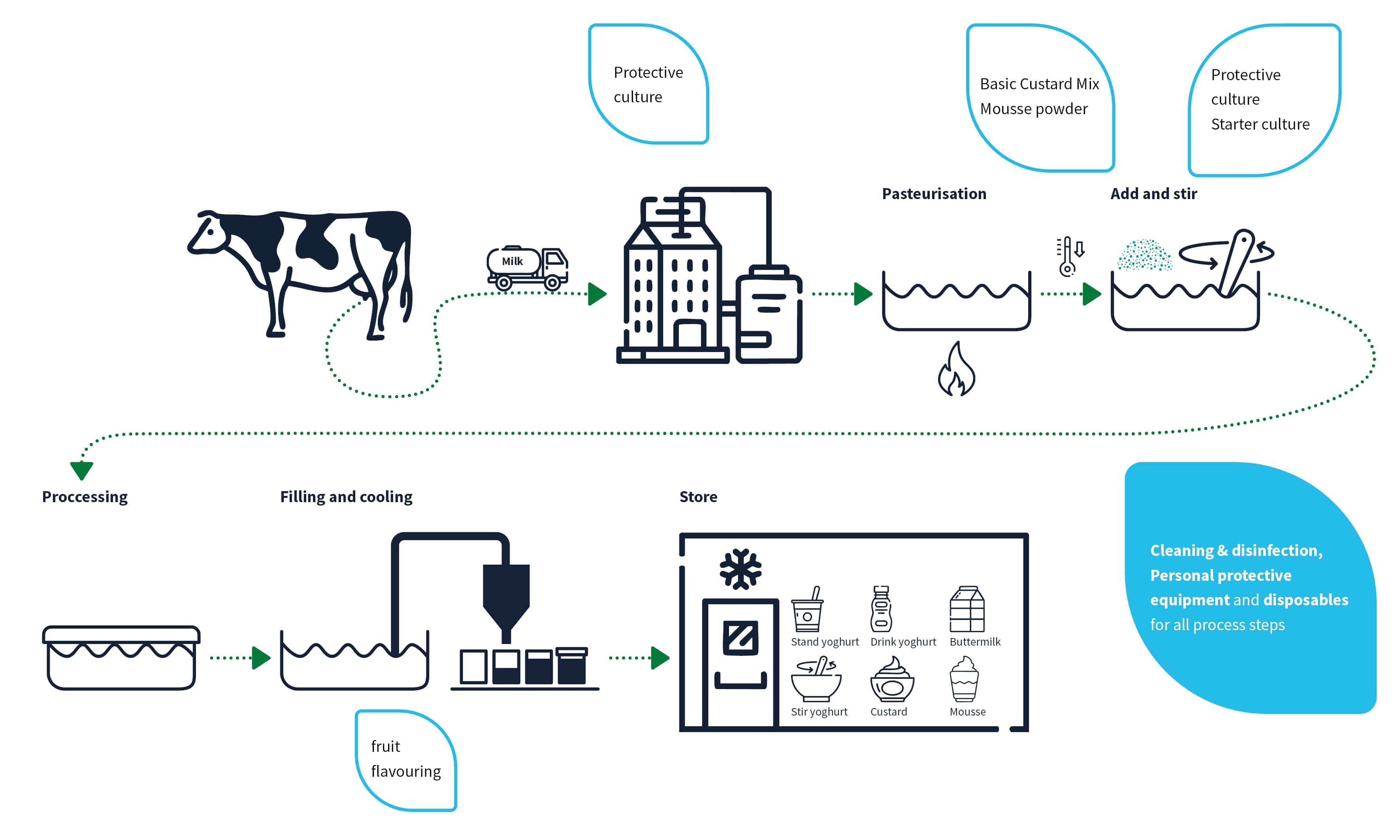
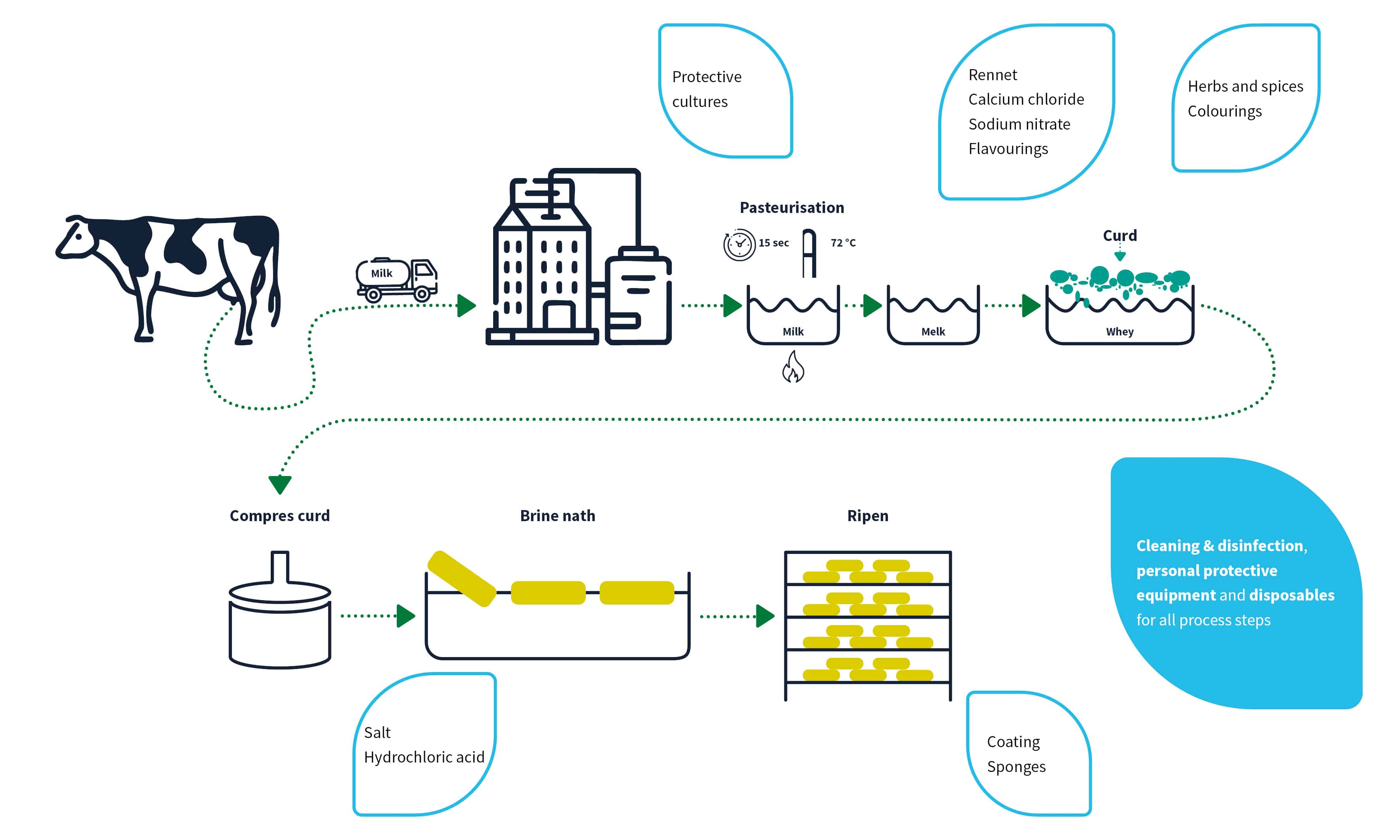
Process thinking means letting go of assumptions and examining step by step what is really happening — from the milk source to the final product, and everything in between. By looking at dairy production as a whole, connections become visible that previously remained hidden. Questions that help in this process include:
-
- What happens at each step of the process?
- Where in the process does the deviation occur?
- Is what we see the actual cause, or just a symptom?
- What changes when we look further back in the process?

Process of fresh dairy and cheese
Measuring means knowing
Facts form the foundation of any good analysis. This means measuring, investigating, and comparing. Both the product and its environment can be included in this process. Think of microbiological testing and additional measurements such as temperature, pH, air quality, concentrations, and moisture levels. These data help support or challenge assumptions and provide direction for the next steps.
Advice and support
If you have questions about recurring deviations, In2Food is happy to think along with you.